

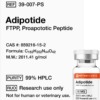

Adipotide (FTPP) 10mg Research Peptide
Adipotide (FTPP) 10mg is a synthetic pro-apoptotic peptidomimetic developed as a research tool for studying targeted interactions with the vasculature associated with white adipose tissue. Also known as FTPP, Fat-Targeted Proapoptotic Peptide, Prohibitin-TP01, and prohibitin-targeting peptide, Adipotide has a distinctive two-domain architecture that separates it from conventional receptor-agonist peptides.
The molecule combines a vascular-homing sequence with a pro-apoptotic peptide domain. The published construct is CKGGRAKDC-GG-D(KLAKLAK)₂. PubChem lists the sequence, molecular formula, molecular weight, and chemical identifiers for Adipotide, while peer-reviewed research describes its development as a ligand-directed peptidomimetic targeting white adipose tissue vasculature.
For researchers evaluating Adipotide (FTPP) 10mg from Peptide Science, the primary scientific value lies in studying targeted peptide delivery, prohibitin-associated vascular biology, and apoptosis rather than conventional endocrine signaling.
Primary Research Classification
Adipotide (FTPP) 10mg can be classified as:
- Synthetic chimeric peptidomimetic
- Fat-targeted pro-apoptotic peptide
- Prohibitin-targeting research peptide
- Vascular-homing peptide construct
- Apoptosis research compound
- Adipose-tissue vascular research tool
- Preclinical metabolic research compound
Unlike GLP-1, GIP, or growth-hormone-related peptides, Adipotide is not primarily designed to activate a conventional metabolic hormone receptor. Its research concept centers on targeted delivery of a cytotoxic/pro-apoptotic sequence to a specific vascular environment.
Scientific Background
Adipotide emerged from research investigating molecular markers associated with the vasculature of white adipose tissue. The peptide contains the homing sequence CKGGRAKDC, which has been studied for interaction with prohibitin-associated targets on the surface of vascular endothelial cells in white adipose tissue.
The second component is D(KLAKLAK)₂, a D-amino-acid-containing pro-apoptotic sequence. The two functional regions are connected by a glycine-glycine linker.
This creates a modular molecular design:
Targeting domain → linker → pro-apoptotic domain
The targeting region is intended to provide cellular or tissue selectivity, while the pro-apoptotic component provides the downstream biological activity once delivered to the relevant cellular compartment.
Research reviews describe Adipotide as a chimeric peptide that targets prohibitin at the surface of vascular endothelial cells associated with white adipose tissue.
Molecular Structure and Sequence
PubChem reports the following chemical information for Adipotide:
| Specification | Information |
|---|---|
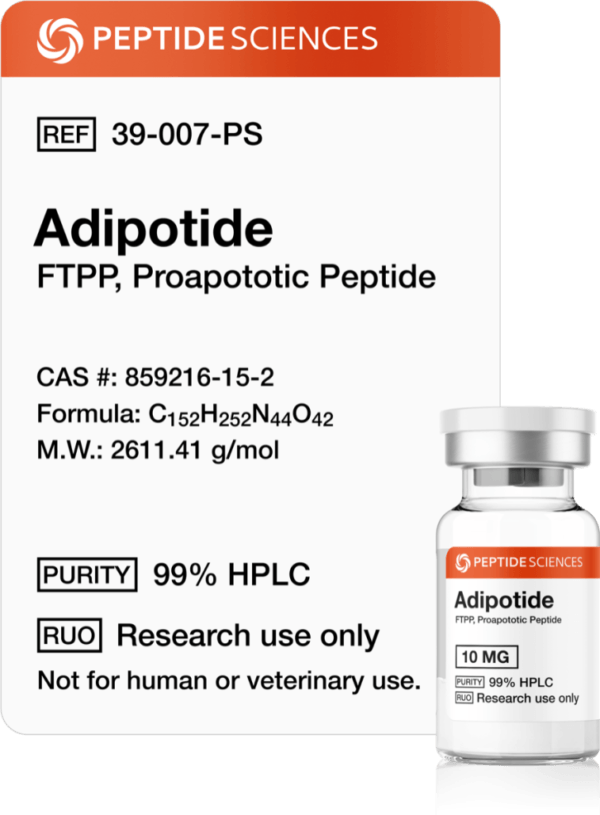
| Product | Adipotide (FTPP) 10mg |
| Classification | Synthetic chimeric peptidomimetic |
| Alternative name | FTPP / Fat-Targeted Proapoptotic Peptide |
| Sequence | CKGGRAKDC-GG-D(KLAKLAK)₂ |
| Molecular Formula | C₁₁₁H₂₀₆N₃₆O₂₈S₂ |
| Molecular Weight | 2557.2 g/mol |
| CAS Number | 859216-15-2 |
| Research focus | Adipose vascular targeting and apoptosis |
| Research status | Investigational / preclinical |
The 10mg designation refers to the stated product quantity and should not be confused with molecular weight, concentration, purity, or analytical assay results.
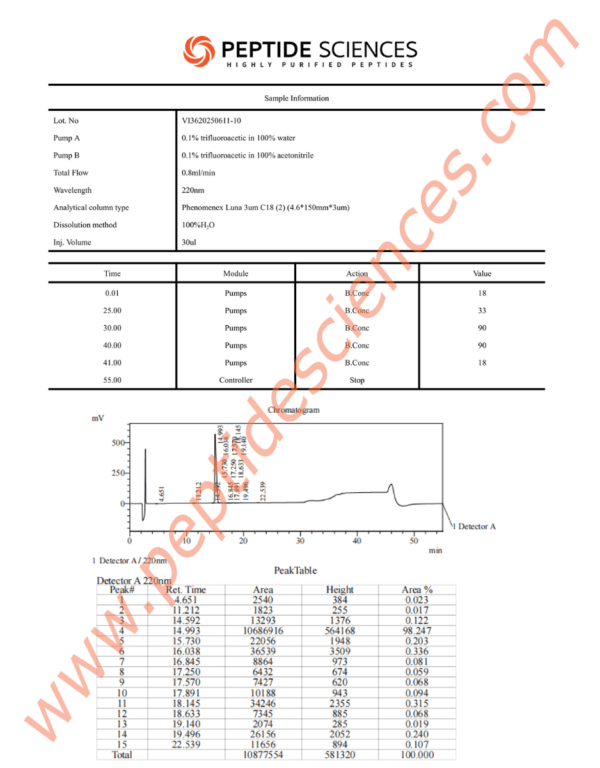
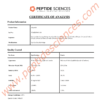
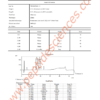
Product-specific information should be verified from the applicable Certificate of Analysis or product documentation.
Mechanism of Research Interest
Adipotide is particularly interesting because its mechanism is based on targeted peptide delivery rather than conventional receptor agonism.
The CKGGRAKDC homing sequence has been investigated for binding to prohibitin-associated targets on vascular endothelial cells in white adipose tissue. Prohibitin-1 (PHB1) is a multifunctional protein involved in several cellular processes and can be found in different cellular compartments, including the plasma membrane and mitochondria.
Following targeting, the D(KLAKLAK)₂ domain is designed to promote pro-apoptotic activity. Research literature describes the construct as damaging adipose-tissue vasculature and disrupting the blood supply supporting adipocytes.
This mechanism makes Adipotide useful for investigating several connected biological questions:
- How vascular homing peptides recognize tissue-associated molecular markers
- How targeted peptide constructs enter or interact with endothelial cells
- How pro-apoptotic sequences influence intracellular membranes
- How endothelial apoptosis affects adipose-tissue biology
- How vascular remodeling can influence metabolic tissue environments
Because these mechanisms are complex and model-dependent, research findings should not be interpreted as evidence of established therapeutic efficacy in humans.
Key Research Applications
Adipotide has been investigated in several areas of experimental biology.
1. Adipose Vascular Biology
Researchers can use Adipotide as a molecular probe for studying the relationship between adipose tissue and its supporting microvasculature.
2. Prohibitin-Targeting Research
The peptide provides a model for investigating PHB1-associated targeting on vascular endothelial cells and the potential use of tissue-associated molecular markers for selective delivery.
3. Apoptosis Research
The D(KLAKLAK)₂ component provides a system for studying targeted pro-apoptotic activity and downstream cellular responses.
4. Peptide Delivery Research
Its two-domain structure makes Adipotide relevant to research into modular peptide engineering, where one sequence provides targeting characteristics and another provides functional activity.
5. Metabolic and Adipose-Tissue Research
Animal studies have examined Adipotide in models of obesity, adipose-tissue reduction, and insulin resistance. These findings remain preclinical and should not be extrapolated directly to human outcomes.
What Research Has Shown
A frequently cited 2011 study evaluated Adipotide in obese Old World monkeys. Researchers reported targeted apoptosis within blood vessels of white adipose tissue, reductions in white adipose tissue, weight loss, and improved insulin resistance.
Importantly, the same study reported reversible changes in renal proximal tubule function at experimentally determined doses. This finding is an important limitation when interpreting the compound’s preclinical profile.
Earlier research in animal models also investigated the relationship between adipose-tissue vasculature, apoptosis, and metabolic changes. However, these findings represent experimental animal research and do not establish safety or effectiveness for human use.
For this reason, researchers searching for peptide sciences products should distinguish Adipotide from approved metabolic medicines and from peptides with established clinical indications.
Storage and Handling
Storage requirements can vary according to the specific formulation, manufacturing process, container, and batch documentation.
Do not assume a storage temperature, shelf life, reconstitution requirement, solvent, or formulation unless it is explicitly documented for the specific product batch.
Product-specific information should be verified from the applicable Certificate of Analysis or product documentation.
Researchers should handle Adipotide according to applicable institutional laboratory procedures, chemical hygiene requirements, and the documentation supplied with the material.
Why Researchers Choose Peptide Sciences
Researchers evaluating Adipotide (FTPP) 10mg from Peptide Science should focus on documented product attributes rather than unsupported marketing claims.
Relevant verification points may include:
- Peptide identity
- Lot-specific documentation
- Sequence confirmation
- Molecular characterization
- Analytical testing
- Certificate of Analysis availability
- Stated product quantity
- Formulation information, where documented
Product-specific information should be verified from the applicable Certificate of Analysis or product documentation.
This approach allows researchers to compare materials based on objective documentation while maintaining appropriate laboratory quality-control practices.
Research Evidence and Limitations
Adipotide is an experimental compound with a relatively distinctive mechanism. Much of the foundational evidence comes from cellular, animal, and non-human primate research rather than established human clinical evidence.
The 2011 primate study is particularly important because it demonstrated biological activity in obese monkeys while also identifying renal effects that limited the interpretation of the compound’s safety profile.
Therefore, Adipotide should be viewed as a research probe and investigational peptidomimetic, not as an established weight-loss treatment.
Researchers should also distinguish the molecule’s experimentally observed effects from commercial claims that may overstate its clinical relevance.
Laboratory Research Use Only
Adipotide (FTPP) 10mg is intended for laboratory research use only. It is not intended for human consumption, veterinary use, diagnosis, treatment, prevention, or mitigation of any disease or medical condition.
No human or animal dosing recommendations are provided on this page. Experimental findings from animal studies should not be interpreted as evidence of human safety or efficacy.
Researchers should consult applicable institutional procedures, regulatory requirements, safety documentation, and product-specific analytical documentation before working with the material.