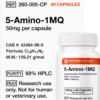
5-Amino-1MQ 50mg – NNMT Inhibitor Research Compound
5-Amino-1MQ 50mg is a research compound centered on the enzyme nicotinamide N-methyltransferase (NNMT).
Unlike peptide research products such as Semaglutide or Retatrutide, 5-Amino-1MQ is a small organic molecule. Its primary research interest comes from its interaction with NNMT and the downstream metabolic consequences associated with altering NNMT activity.
NNMT uses SAM as a methyl donor and catalyzes the methylation of nicotinamide. Research has connected NNMT activity with cellular levels of NAD⁺, SAM, and 1-MNA, making the enzyme relevant to investigations of metabolism and methylation biology.
Researchers evaluating 5-Amino-1MQ 50mg from Peptide Science should distinguish the established biochemical characteristics of 5MQ from the product-specific attributes of a particular batch.
What Is 5-Amino-1MQ 50mg?
5-Amino-1MQ is a common shorthand for 5-amino-1-methylquinolinium, a quinolinium-based small molecule investigated as an NNMT inhibitor.
Published research has identified methylquinolinium compounds as promising NNMT inhibitor scaffolds. Structural studies have examined their interaction with the nicotinamide-binding region of NNMT and have used structure-activity relationship analysis to investigate how chemical modifications influence enzyme inhibition.
The compound should therefore be understood as a small-molecule enzyme inhibitor research compound, rather than a peptide.
5-Amino-1MQ 50mg Scientific Classification
5-Amino-1MQ 50mg can be classified as:
- Small-molecule research compound
- Quinolinium-based compound
- NNMT inhibitor
- Enzyme-targeting research tool
- Metabolic research compound
- Chemical biology research compound
Its principal molecular target is nicotinamide N-methyltransferase (NNMT).
5-Amino-1MQ 50mg Molecular Structure
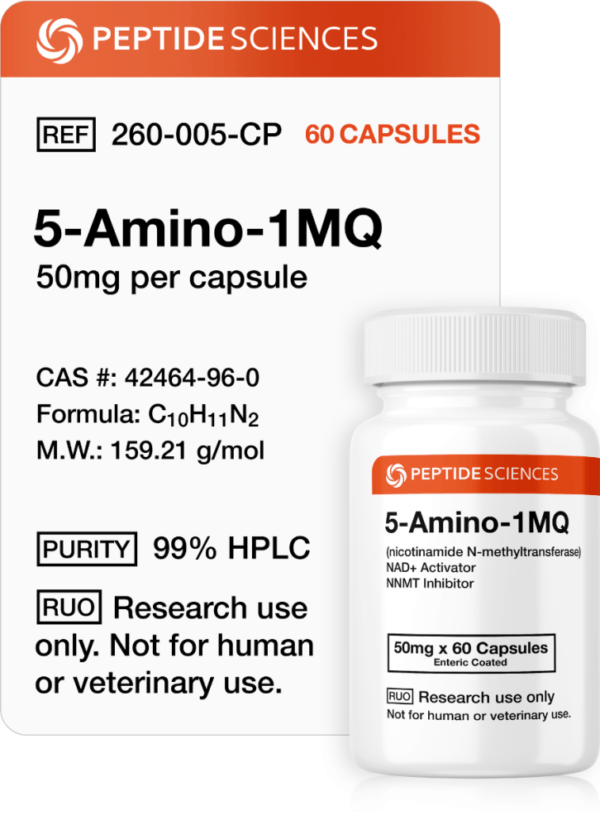
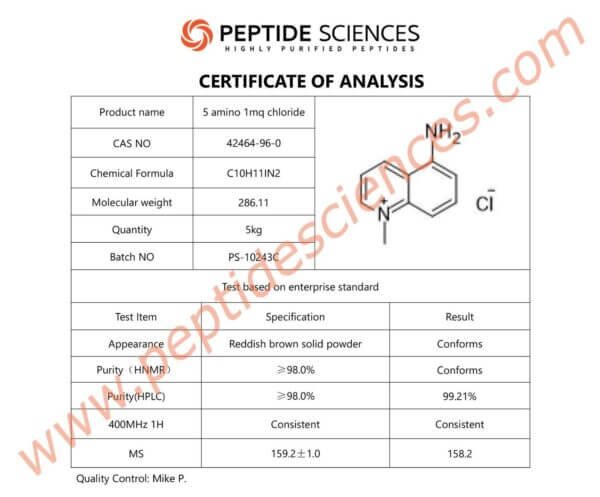
The parent 5-amino-1-methylquinolinium cation is listed by PubChem with the molecular formula C₁₀H₁₁N₂⁺ and molecular weight of approximately 159.21 g/mol.
However, the exact molecular specification of a commercial preparation can depend on its chemical form or counterion. PubChem separately lists 5-amino-1-methylquinolinium iodide, for example, with the formula C₁₀H₁₁IN₂ and molecular weight of 286.11 g/mol.
For that reason, researchers should not assume that the parent compound’s molecular weight represents the molecular weight of every commercial 5-Amino-1MQ preparation.
| Specification | 5-Amino-1MQ 50mg |
|---|---|
| Product | 5-Amino-1MQ 50mg |
| Common Name | 5-Amino-1MQ / 5MQ |
| Chemical Class | Quinolinium-based small molecule |
| Research Classification | NNMT inhibitor |
| Primary Target | Nicotinamide N-methyltransferase |
| Parent Cation Formula | C₁₀H₁₁N₂⁺ |
| Parent Cation Molecular Weight | Approx. 159.21 g/mol |
| Product Quantity | 50mg |
| Peptide? | No |
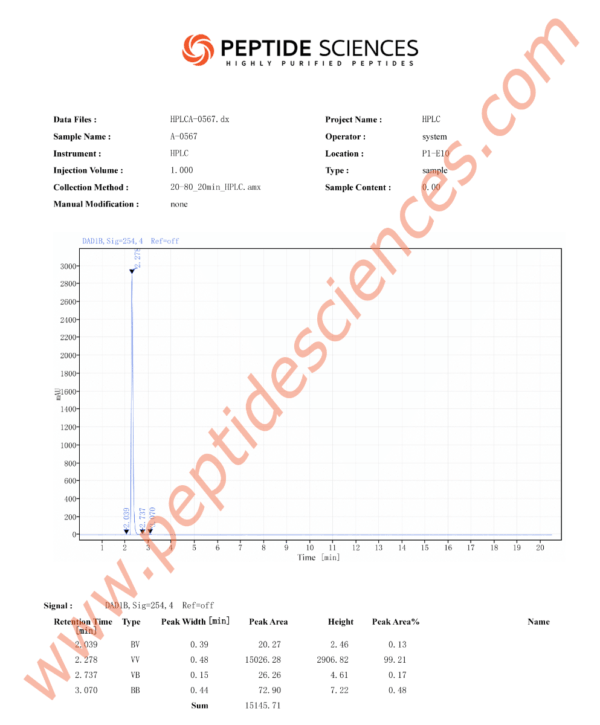
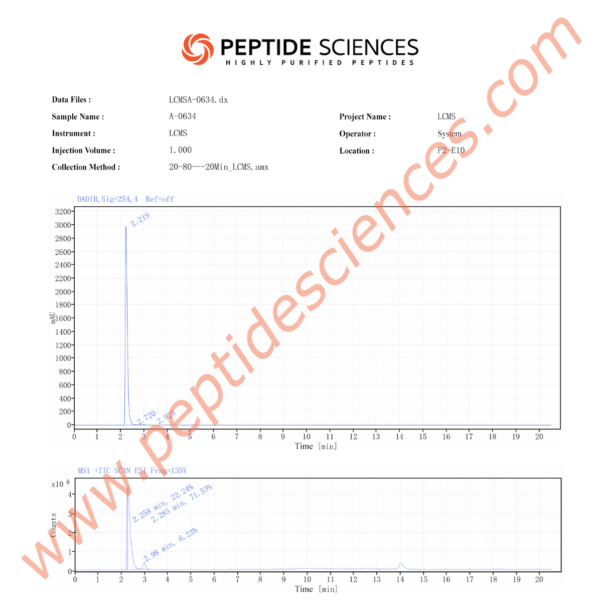
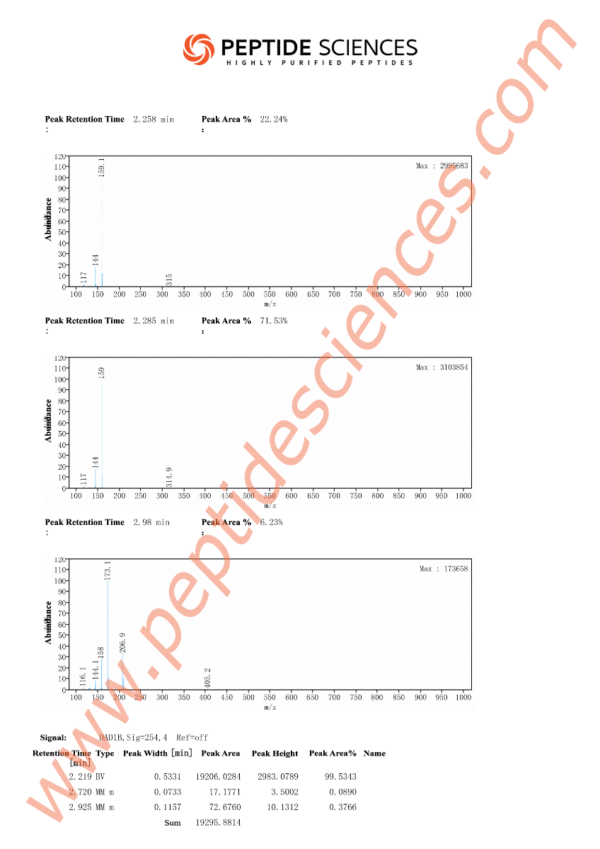
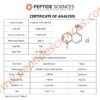
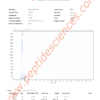
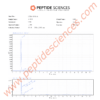
Product-specific information should be verified from the applicable Certificate of Analysis or product documentation.
How 5-Amino-1MQ 50mg Works
The primary mechanism of research interest involves NNMT inhibition.
NNMT normally transfers a methyl group from SAM to nicotinamide. This reaction produces 1-methylnicotinamide (1-MNA) and S-adenosyl-L-homocysteine (SAH).
By inhibiting NNMT, research compounds such as 5-Amino-1MQ can alter this metabolic reaction. Studies have reported changes in intracellular 1-MNA and other metabolites following NNMT inhibition. Research has also investigated effects on NAD⁺ and SAM levels, linking NNMT activity to broader metabolic networks.
This makes 5-Amino-1MQ particularly useful for investigating the relationship between methylation metabolism and cellular energy pathways.
5-Amino-1MQ 50mg and NNMT
NNMT is a cytosolic methyltransferase that uses SAM as a methyl donor.
Its reaction can be summarized as:
Nicotinamide + SAM → 1-MNA + SAH
The enzyme’s activity therefore connects two important biochemical systems:
- Nicotinamide and NAD⁺ metabolism
- SAM-dependent methylation metabolism
Research has suggested that altered NNMT activity can influence intracellular metabolite pools and cellular metabolic states.
5-Amino-1MQ 50mg and NAD⁺ Metabolism
One major area of interest is the relationship between NNMT activity and NAD⁺ biology.
Nicotinamide is involved in NAD⁺ salvage pathways. NNMT diverts a portion of nicotinamide toward 1-MNA formation, creating a biochemical connection between NNMT activity and NAD⁺ metabolism.
Research using NNMT inhibitors has reported increased intracellular NAD⁺ and SAM under certain experimental conditions. These observations have made NNMT an important target for studies investigating cellular energy regulation and metabolic signaling.
5-Amino-1MQ 50mg and SAM-Dependent Methylation
S-adenosyl-L-methionine is a major methyl donor used by numerous methyltransferases.
Because NNMT consumes SAM, changes in NNMT activity can potentially affect the cellular methylation environment. Research has therefore examined NNMT in relation to methylation potential, metabolic regulation, and epigenetic biology.
This connection makes 5-Amino-1MQ relevant to research exploring the intersection between metabolism and methylation.
5-Amino-1MQ 50mg and Cellular Signaling
NNMT inhibition has been investigated in several cellular models to understand downstream effects on metabolic and signaling pathways.
For example, published research involving 5MQ in HeLa cells examined changes in proliferation-associated biology and reported alterations involving phospho-Akt and SIRT1 alongside NNMT inhibition. These findings are model-specific and should not be generalized to human therapeutic effects.
Such studies demonstrate why 5-Amino-1MQ can be useful as a chemical tool for exploring the biological consequences of NNMT inhibition.
Key Research Applications of 5-Amino-1MQ 50mg
5-Amino-1MQ 50mg may be investigated in laboratory research involving:
- NNMT enzymology: Studying enzyme inhibition and catalytic mechanisms.
- Metabolic research: Examining changes in cellular metabolite networks.
- NAD⁺ biology: Investigating relationships between NNMT activity and NAD⁺ metabolism.
- Methylation research: Studying SAM utilization and methylation potential.
- Chemical biology: Evaluating small-molecule interactions with NNMT.
- Cell signaling: Investigating downstream pathways associated with NNMT activity.
- Adipocyte research: Studying NNMT-related metabolic pathways in cellular models.
- Cancer biology: Investigating NNMT-associated cellular phenotypes in experimental models.
These applications represent areas of research rather than established medical uses.
5-Amino-1MQ 50mg and Metabolic Research
Interest in NNMT has expanded because the enzyme sits at the intersection of several metabolic pathways.
Preclinical research has investigated NNMT inhibition in adipocytes and animal models of metabolic dysfunction. Some studies reported changes in body composition, glucose-related measures, lipid metabolism, and liver pathology following experimental NNMT inhibition.
However, these findings are primarily preclinical. They should not be presented as evidence that 5-Amino-1MQ is an established treatment for obesity, diabetes, liver disease, or other medical conditions.
Why Researchers Choose 5-Amino-1MQ 50mg
Researchers may select 5-Amino-1MQ when they need a small-molecule research tool for investigating NNMT-dependent biology.
When evaluating Peptide Science as a research source, researchers should focus on verifiable characteristics of the specific product rather than assuming that general literature findings describe every commercial preparation.
Relevant documentation may include:
- Chemical identity
- Batch-specific analytical information
- Certificate of Analysis availability
- Purity information
- Analytical characterization
- Chemical form or counterion
- Product quantity
- Formulation information
Product-specific information should be verified from the applicable Certificate of Analysis or product documentation.
Peptide Science and 5-Amino-1MQ 50mg
Although the search term Peptide Science is commonly associated with research-peptide products, 5-Amino-1MQ is scientifically classified as a small-molecule NNMT inhibitor.
Researchers searching for 5-Amino-1MQ 50mg from Peptide Science should therefore evaluate this compound according to its chemical identity, NNMT-targeting properties, and batch-specific documentation rather than applying peptide-specific assumptions.
The distinction is important for accurate product classification, laboratory documentation, and scientific communication.
5-Amino-1MQ 50mg Storage and Handling
Storage and handling requirements depend on the specific chemical form, formulation, packaging, and manufacturer documentation.
Researchers should follow the product-specific documentation supplied with the applicable batch.
Product-specific information should be verified from the applicable Certificate of Analysis or product documentation.
No generalized storage condition is provided here because doing so without product-specific documentation could be inaccurate.
5-Amino-1MQ 50mg Research Limitations
Research involving 5-Amino-1MQ remains an evolving area.
Some evidence comes from biochemical assays and cultured-cell experiments, while other studies have investigated NNMT inhibition in animal models. Findings can vary according to experimental model, compound preparation, exposure conditions, target expression, and assay methodology.
Importantly, preclinical findings should not be interpreted as proof of human efficacy or safety.
Researchers should review primary literature and appropriate analytical documentation when planning or interpreting experiments involving 5-Amino-1MQ.
5-Amino-1MQ 50mg Research Use Disclaimer
5-Amino-1MQ 50mg is intended for laboratory research use only.
This product is not presented as a food, dietary supplement, cosmetic, or approved medical treatment. Information on this page is provided for scientific and research purposes.
No human or animal dosing, administration, injection, or reconstitution instructions are provided. Researchers are responsible for following applicable laboratory procedures, institutional requirements, safety protocols, regulations, and product documentation.