



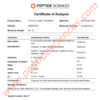
GHK-Cu 200mg (Copper Peptide) | Glycyl-L-Histidyl-L-Lysine Copper Research Peptide
GHK-Cu 200mg (Copper Peptide) is a copper-associated tripeptide preparation designed for research involving peptide-metal interactions, extracellular matrix biology, cellular repair pathways, and connective-tissue signaling.
GHK stands for glycyl-L-histidyl-L-lysine, a naturally occurring tripeptide identified in human biological fluids. GHK has a strong affinity for copper ions and can form the copper complex commonly referred to as GHK-Cu.
Unlike many signaling peptides that act primarily through a single defined receptor, GHK-Cu research involves a broader network of biochemical processes. Studies have examined its interaction with copper metabolism, extracellular matrix proteins, fibroblast activity, metalloproteinases, glycosaminoglycans, and growth-factor pathways.
This makes GHK-Cu particularly relevant to laboratories investigating skin biology, tissue remodeling, wound-repair mechanisms, collagen metabolism, and copper-dependent cellular processes.
Primary Research Classification
GHK-Cu can be classified as:
- Copper-binding tripeptide
- Copper-peptide complex
- Glycyl-L-histidyl-L-lysine copper complex
- Extracellular matrix research reagent
- Tissue-remodeling research compound
- Peptide-metal coordination system
The molecule should not be described as a conventional hormone or as a peptide that acts through one universally established receptor.
Scientific Background
GHK is a three-amino-acid peptide consisting of:
Glycine – Histidine – Lysine (GHK)
The histidine residue is particularly important to copper coordination. Research into GHK-Cu has demonstrated that the peptide can form stable copper complexes, with the precise coordination chemistry depending on the chemical environment and molecular state.
The biological interest in GHK-Cu began with observations that GHK and related copper-containing systems could influence cellular growth and differentiation. Subsequent research expanded into fibroblast biology, collagen synthesis, glycosaminoglycan production, extracellular matrix remodeling, and wound-repair models.
Importantly, the literature does not support reducing GHK-Cu to a single biological mechanism. Its research profile is better understood as a combination of copper coordination, extracellular matrix regulation, cellular signaling, and tissue-remodeling processes.
Molecular Structure and Technical Specifications
| Specification | Research Information |
|---|---|
| Product | GHK-Cu 200mg (Copper Peptide) |
| Common Name | GHK-Cu |
| Full Name | Glycyl-L-histidyl-L-lysine copper |
| Peptide Sequence | Gly-His-Lys (GHK) |
| Classification | Copper-binding tripeptide complex |
| Parent Peptide | Glycyl-L-histidyl-L-lysine |
| Copper | Cu(II)-associated complex |
| PubChem Reference | GHK-Cu / copper tripeptide records |
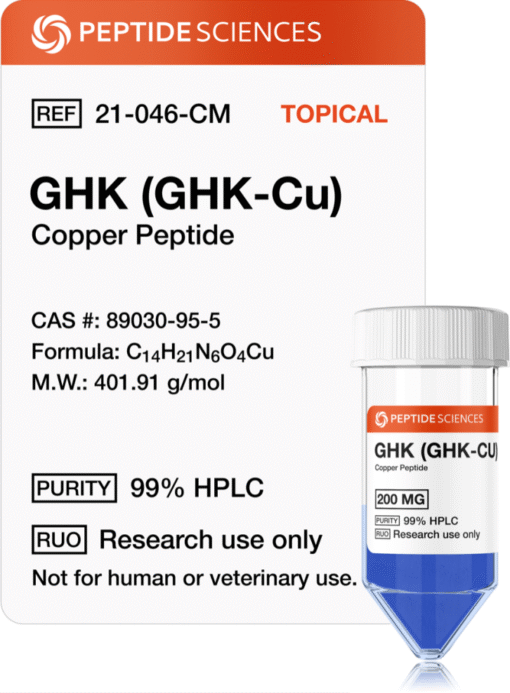
| Reported Molecular Weight | Approximately 402.9 g/mol for one commonly indexed GHK-Cu copper complex |
| Product Quantity | 200mg |
| Research Status | Laboratory research |
PubChem contains multiple structurally related GHK-Cu records reflecting different representations, charge states, and copper-complex forms. For example, one indexed copper tripeptide record reports a molecular weight of 400.90 g/mol, while another commonly indexed prezatide-copper record reports 402.92 g/mol.
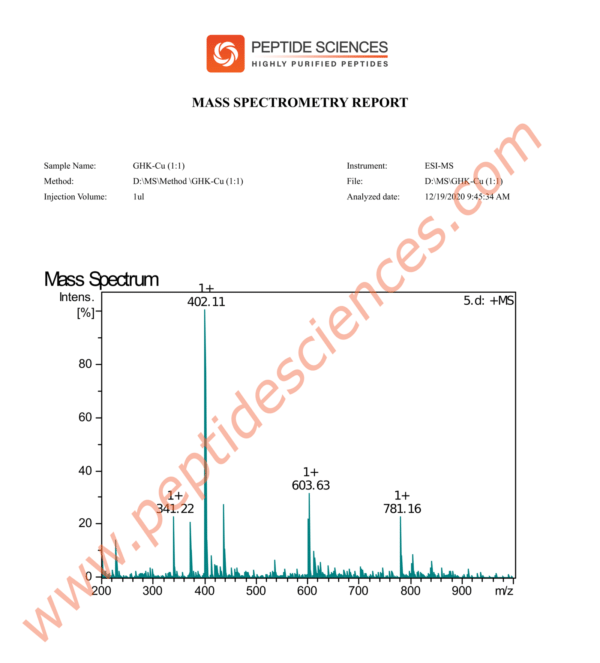
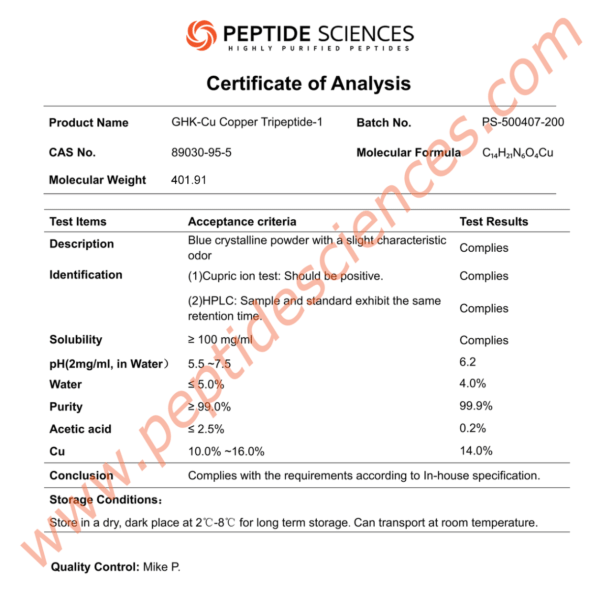
For this reason, the exact chemical form supplied with a particular research product should be confirmed against its batch documentation rather than assuming that every GHK-Cu preparation has an identical analytical specification.
Product-specific information should be verified from the applicable Certificate of Analysis or product documentation.
Mechanism of Research Interest
GHK-Cu is scientifically interesting because it combines a short biologically active peptide with copper coordination.
Research suggests that several mechanisms may contribute to its observed cellular effects.
1. Copper Coordination
GHK has a strong affinity for copper ions. Copper coordination can alter the chemical behavior of the peptide and is central to the biological research surrounding GHK-Cu. Studies of GHK-copper complexes have examined their stoichiometry, stability, and interactions with biological systems.
2. Extracellular Matrix Signaling
One of the best-established areas of GHK-Cu research is extracellular matrix biology.
In cultured human fibroblasts, GHK-Cu has been reported to stimulate collagen synthesis. Earlier experimental research also examined increases in glycosaminoglycan production, including dermatan sulfate and heparan sulfate.
These findings make GHK-Cu relevant to research into:
- Collagen metabolism
- Dermal fibroblast function
- Proteoglycan biology
- Glycosaminoglycan synthesis
- Extracellular matrix organization
- Tissue remodeling
3. Matrix Metalloproteinases
GHK-Cu has also been investigated in relation to matrix metalloproteinase activity.
One fibroblast study found increased MMP-2 levels and MMP-2 messenger RNA following GHK-Cu exposure. The same study reported increases in TIMP-1 and TIMP-2, suggesting that the compound may influence multiple components of extracellular matrix turnover rather than simply increasing matrix production.
This balance between matrix synthesis and matrix degradation is an important area of research in wound biology and tissue remodeling.
4. Growth-Factor Signaling
Research has investigated GHK-Cu in relation to fibroblast growth and the expression of signaling molecules including basic fibroblast growth factor (bFGF) and vascular endothelial growth factor (VEGF).
In cultured fibroblasts, copper tripeptide exposure was associated with changes in growth-factor production, particularly in irradiated cells.
These observations provide a research basis for studying GHK-Cu in cellular models involving fibroblast activity, angiogenic signaling, and tissue repair.
Key Research Applications
GHK-Cu is particularly relevant to laboratories studying:
Skin and Dermal Biology
Researchers investigate GHK-Cu in models of fibroblast activity, collagen synthesis, extracellular matrix organization, and dermal remodeling.
Collagen Research
GHK-Cu has a long history of experimental research examining collagen production by fibroblasts. Animal wound models have also reported increased collagen and extracellular matrix accumulation.
Glycosaminoglycan and Proteoglycan Research
Studies have examined GHK-Cu effects on glycosaminoglycans and proteoglycans such as decorin and biglycan, providing additional models for understanding extracellular matrix organization.
Wound-Repair Research
Experimental studies have evaluated GHK-Cu in cellular and animal wound models. These studies provide useful mechanistic data, but results from experimental models should not be interpreted as proof of therapeutic efficacy in humans.
Copper-Dependent Biology
Because GHK naturally coordinates copper, the compound can also be used in laboratory research examining peptide-metal interactions, copper availability, and copper-associated biological processes.
Why Researchers May Choose GHK-Cu
Peptide Sciences provides research materials for investigators studying peptide chemistry, molecular biology, and cellular signaling.
Researchers evaluating GHK-Cu may be interested in the compound because:
- It has a well-documented history of biochemical and cellular research.
- Its structure is based on the naturally occurring GHK tripeptide.
- Copper coordination provides a distinct research variable compared with uncomplexed GHK.
- Published studies cover fibroblast biology, collagen, glycosaminoglycans, metalloproteinases, and tissue remodeling.
- It supports experimental investigation across multiple extracellular matrix pathways.
When selecting a research material, investigators should independently review the applicable batch documentation, identity information, analytical characterization, and Certificate of Analysis.
Peptide Science and Peptide Sciences Research Considerations
The scientific literature surrounding Peptide Science and copper peptides should be evaluated carefully because GHK-Cu has appeared in many different experimental formulations and delivery systems.
Published research may involve free GHK, GHK-Cu complexes, topical cosmetic formulations, cell-culture systems, animal models, or advanced biomaterials. These materials should not automatically be treated as chemically or experimentally equivalent.
For researchers comparing peptide sciences products or suppliers, the most useful criteria include verified peptide identity, documented chemical form, batch-specific analytical data, and appropriate product documentation.
The term peptide sciences may also appear in commercial searches for GHK-Cu, but search terminology should not be confused with scientific evidence. The strongest basis for evaluating the compound remains its molecular identity and the quality of the supporting research.
Storage and Handling
Storage requirements can vary according to the specific GHK-Cu formulation, container, excipients, moisture exposure, and manufacturing specifications.
Researchers should follow the storage and handling instructions supplied with the applicable product documentation.
Product-specific information should be verified from the applicable Certificate of Analysis or product documentation.
No assumptions should be made about temperature, reconstitution, solvent compatibility, shelf life, or post-opening stability without product-specific documentation.
Research Evidence and Limitations
GHK-Cu has a substantial experimental literature, particularly in fibroblast and extracellular matrix research. However, much of the mechanistic evidence comes from in vitro experiments, animal studies, or specialized formulations.
Recent reviews continue to identify GHK-Cu as an area of scientific interest while noting the need for standardized clinical evidence and better-defined research protocols.
Therefore, laboratory observations involving collagen, wound repair, inflammatory signaling, antioxidant activity, or tissue remodeling should not be presented as guaranteed clinical outcomes.
The research value of GHK-Cu lies in its ability to serve as a defined model system for investigating the interaction between a small peptide, copper coordination, and complex cellular remodeling pathways.
Laboratory Research Use Only
GHK-Cu 200mg (Copper Peptide) is intended for laboratory research purposes only.
This product is not intended to diagnose, treat, cure, or prevent any disease or medical condition. It should not be represented as a human or veterinary therapeutic. Researchers should follow applicable institutional safety procedures, laboratory protocols, and product documentation.