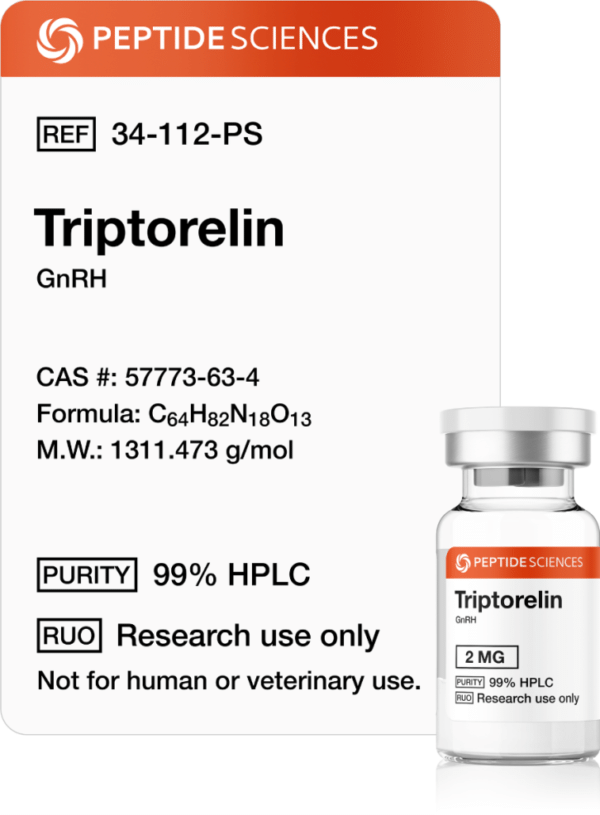
Triptorelin (GnRH) 2mg for Laboratory Research
Triptorelin (GnRH) 2mg is a synthetic decapeptide belonging to the class of gonadotropin-releasing hormone (GnRH) receptor agonists. It is primarily studied for its ability to interact with GnRH receptors and influence signaling within the hypothalamic-pituitary-gonadal axis.
GnRH is a naturally occurring hypothalamic peptide that plays a central role in reproductive endocrine signaling. Under physiological conditions, GnRH is released in pulses and interacts with GnRH receptors located on pituitary gonadotroph cells. This interaction regulates the secretion of the gonadotropins LH and FSH.
Triptorelin provides researchers with a structurally modified GnRH analogue for studying this receptor system under controlled experimental conditions.
Primary Research Classification: GnRH Receptor Agonist
Triptorelin is classified as a GnRH receptor agonist because it activates the same receptor system targeted by endogenous GnRH.
The GnRH receptor belongs to the G protein-coupled receptor (GPCR) family. When activated, it initiates intracellular signaling cascades that ultimately influence gonadotropin secretion.
This makes Triptorelin particularly relevant to research involving:
- GnRH receptor activation
- GPCR signaling
- LH and FSH regulation
- Pituitary endocrine signaling
- Reproductive hormone pathways
- Peptide-receptor interactions
- HPG-axis research
Researchers using Triptorelin (GnRH) should distinguish receptor activation studies from clinical interpretations and evaluate experimental findings according to the specific model being used.
Scientific Background
Gonadotropin-releasing hormone is a key signaling peptide within the reproductive endocrine system.
GnRH is produced by specialized neurons in the hypothalamus and released into the hypophyseal portal circulation. It then reaches the anterior pituitary, where it interacts with GnRH receptors on gonadotroph cells.
GnRH receptor activation stimulates intracellular signaling pathways that promote the synthesis and secretion of LH and FSH.
These hormones subsequently participate in the regulation of reproductive processes and gonadal function.
Triptorelin is structurally related to native GnRH but incorporates amino-acid substitutions designed to alter its biological characteristics. These structural modifications contribute to its potency and increased stability compared with endogenous GnRH.
For researchers, this makes Triptorelin useful for examining how structural changes within peptide ligands can influence receptor interaction, signaling, and biological activity.
Molecular Structure and Receptor Interaction
Triptorelin is a decapeptide, meaning that it consists of ten amino-acid residues.
Its structure is based on the native GnRH sequence while incorporating specific modifications. These changes affect the peptide’s interaction with the GnRH receptor and its susceptibility to enzymatic degradation.
The interaction between Triptorelin and the GnRH receptor represents an important example of peptide ligand-receptor pharmacology.
Researchers can use this system to investigate questions involving:
- Ligand recognition
- Receptor activation
- GPCR conformational changes
- Intracellular signaling
- Peptide stability
- Structure-activity relationships
Product-specific molecular information should always be confirmed using the applicable analytical documentation supplied with the research material.
Mechanism of Research Interest
GnRH Receptor Activation
Triptorelin interacts with the GnRH receptor on pituitary gonadotroph cells.
The receptor is a GPCR that activates intracellular signaling following ligand binding. This provides a well-defined model for studying how peptide ligands translate extracellular receptor interactions into intracellular responses.
Intracellular Signaling
Activation of the GnRH receptor is associated with signaling pathways involving Gq/11 proteins and phospholipase C (PLC).
Downstream signaling can involve phosphoinositide turnover, intracellular calcium mobilization, and protein kinase activation.
These pathways ultimately influence the synthesis and secretion of gonadotropins.
LH and FSH Research
One major area of interest is the relationship between GnRH receptor activation and the secretion of luteinizing hormone and follicle-stimulating hormone.
Researchers can use controlled experimental models to examine how changes in receptor stimulation influence these endocrine signaling pathways.
Receptor Desensitization Research
GnRH signaling is also an important model for studying receptor regulation and cellular adaptation.
Experimental research can examine how prolonged or repeated receptor stimulation affects receptor responsiveness and downstream endocrine signaling.
The precise response depends on experimental conditions, receptor expression, exposure characteristics, and biological model.
Key Research Applications
GnRH Receptor Studies
Triptorelin can be investigated as a ligand for studying GnRH receptor activation and receptor-ligand interactions.
This can help researchers examine the molecular characteristics governing peptide recognition and receptor signaling.
Endocrine Signaling Research
The peptide provides a research model for investigating communication between hypothalamic and pituitary signaling systems.
Researchers can examine downstream endocrine responses under controlled laboratory conditions.
GPCR Research
Because the GnRH receptor is a GPCR, Triptorelin can be relevant to broader investigations into GPCR pharmacology and intracellular signal transduction.
Structure-Activity Research
The structural differences between native GnRH and synthetic analogues such as Triptorelin provide an opportunity to investigate how peptide modifications affect receptor activity and stability.
Peptide Stability Studies
Triptorelin can also be studied in experimental systems examining peptide degradation, stability, and receptor activity.
These studies can help researchers better understand the relationship between molecular structure and biological persistence.
Technical Specifications
| Specification | Information |
|---|---|
| Product Name | Triptorelin (GnRH) 2mg |
| Peptide Class | Synthetic decapeptide |
| Research Classification | GnRH receptor agonist |
| Target | GnRH receptor |
| Primary Research Area | Endocrine and receptor signaling |
| Quantity | 2mg |
| Purity | Verify current product documentation |
| Analytical Testing | Verify applicable batch documentation |
| Molecular Information | Verify applicable Certificate of Analysis |
| Storage | Follow product-specific storage documentation |
Important: Product-specific purity, molecular weight, formulation, analytical testing, and storage requirements should be verified using the applicable Certificate of Analysis (COA) and current Peptide Sciences product documentation.
Why Researchers Choose Peptide Sciences
Research involving receptor-active peptides requires attention to identity, purity, analytical characterization, and batch consistency.
Researchers evaluating Triptorelin from Peptide Sciences should review the product-specific documentation available for the relevant batch before incorporating the material into an experimental protocol.
Important considerations may include:
- Peptide identity
- Analytical purity
- Batch-specific testing
- Certificate of Analysis availability
- Product quantity
- Formulation characteristics
- Storage requirements
These factors help researchers establish appropriate controls and interpret experimental findings with greater confidence.
Peptide Sciences’ research-oriented product positioning makes Triptorelin relevant to laboratories investigating peptide pharmacology, GPCR signaling, endocrine biology, and GnRH receptor activity.
Storage and Handling
Peptide stability can be influenced by temperature, moisture, light exposure, formulation, packaging, and storage duration.
Researchers should follow the product-specific storage and handling instructions supplied with Triptorelin (GnRH) 2mg. Where available, the applicable Certificate of Analysis and product documentation should be treated as the primary source for batch-specific requirements.
Research personnel should handle peptide materials according to their institution’s laboratory safety procedures and applicable regulations.
Avoid relying on generalized storage recommendations when product-specific instructions are available.
Laboratory Research Use Disclaimer
For Laboratory Research Use Only.
Triptorelin (GnRH) 2mg is provided for laboratory research, analytical, and educational purposes. It is not intended for human or veterinary administration, self-administration, diagnosis, treatment, mitigation, or prevention of any disease or medical condition.
No information on this page should be interpreted as medical advice or as a recommendation for human use. Researchers are responsible for complying with applicable laws, regulations, institutional requirements, and laboratory safety procedures.
Experimental findings should be interpreted according to the specific peptide, biological model, experimental conditions, and methodology used.