GHK-Cu 500mg: Researching Copper Tripeptide Signaling and Extracellular Matrix Biology
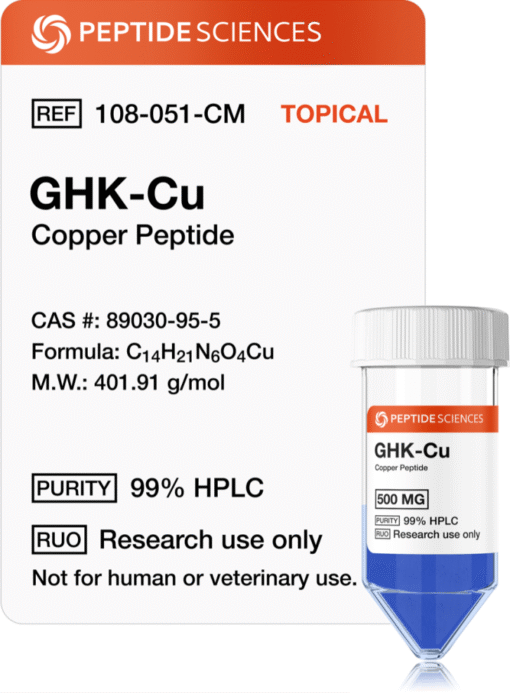
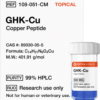
GHK-Cu 500mg is a research-grade preparation of GHK-Cu, a copper-binding tripeptide commonly referred to as copper tripeptide-1. The peptide consists of the amino acids glycine, histidine, and lysine and has a strong scientific connection with copper-dependent biological processes.
GHK-Cu has attracted research interest because its copper-binding properties may influence how copper is transported and made available within biological systems. Copper itself is an important trace element involved in numerous enzymatic reactions, while peptides can influence the availability, localization, and behavior of metal ions.
For researchers, this makes GHK-Cu an interesting model for investigating the relationship between metal coordination, extracellular matrix regulation, cellular signaling, and tissue biology.
The 500mg format may be useful for laboratories that require a larger quantity of material for analytical characterization, formulation research, comparative experiments, or repeated laboratory studies.
Primary Research Classification
GHK-Cu is primarily investigated as a copper-binding metallopeptide with research applications involving:
- Extracellular matrix biology
- Collagen and elastin-related pathways
- Fibroblast signaling
- Cellular stress responses
- Copper-dependent enzyme activity
- Inflammatory signaling
- Oxidative stress research
- Tissue and skin biology
Rather than viewing GHK-Cu as a single-pathway compound, researchers can examine it as part of a broader network involving peptide signaling and copper-dependent biochemical processes.
Scientific Background
GHK, or glycyl-L-histidyl-L-lysine, is a naturally occurring tripeptide that can bind copper ions. The resulting GHK-Cu complex has been studied extensively in experimental models of tissue biology and cellular regulation.
The histidine and other coordinating groups within the peptide contribute to copper binding. This interaction is scientifically important because copper participates in enzymes responsible for processes such as connective-tissue maturation, antioxidant defense, and cellular metabolism.
Research has also explored changes in GHK and GHK-Cu levels in relation to aging and tissue injury. However, these observations do not establish GHK-Cu as a treatment or prove that laboratory findings translate directly into human outcomes.
For this reason, GHK-Cu remains an important subject for controlled laboratory investigation rather than a substitute for established medical interventions.
Mechanism of Research Interest
Copper Coordination
The defining feature of GHK-Cu is its ability to coordinate copper. This property provides a useful model for researchers investigating metal-peptide interactions and the biological consequences of copper availability.
Copper is required for several enzymes involved in cellular and extracellular processes. Studying copper-binding peptides can therefore help researchers better understand how metal ions participate in biological systems.
Extracellular Matrix Research
The extracellular matrix provides structural support around cells and contains proteins such as collagen and elastin. Copper-dependent enzymes, including lysyl oxidase, participate in the maturation and cross-linking of extracellular matrix components.
GHK-Cu is therefore investigated in models examining relationships between copper availability, fibroblast behavior, and extracellular matrix organization.
Fibroblast Signaling
Fibroblasts are important connective-tissue cells responsible for producing and remodeling extracellular matrix components. Experimental research has examined how GHK-Cu interacts with fibroblast-related signaling and gene-expression patterns.
The precise response can vary according to the cell type, experimental conditions, peptide concentration, and surrounding biological environment.
Oxidative Stress and Cellular Signaling
Copper is associated with enzymes involved in antioxidant defense, including copper-containing superoxide dismutase. Researchers may therefore investigate GHK-Cu in experimental systems examining oxidative stress and cellular responses to environmental or metabolic challenges.
These mechanisms remain areas of scientific investigation and should not be interpreted as established therapeutic effects.
Key Research Applications
GHK-Cu 500mg can be studied in several laboratory research areas:
- Extracellular matrix research: Investigating collagen, elastin, and connective-tissue signaling.
- Fibroblast studies: Examining cellular responses associated with matrix production and remodeling.
- Copper biology: Studying copper coordination and metal-dependent biochemical processes.
- Cellular stress research: Exploring oxidative and inflammatory signaling pathways.
- Skin biology research: Investigating cellular and molecular mechanisms associated with dermal tissue models.
- Peptide-metal interactions: Characterizing how small peptides interact with biologically relevant metal ions.
- Analytical research: Evaluating peptide identity, stability, and characteristics using appropriate laboratory techniques.
Researchers should select experimental endpoints according to the specific model and research question rather than assuming a predetermined biological outcome.
Technical Specifications
| Specification | Information |
|---|---|
| Product | GHK-Cu |
| Product Format | 500mg |
| Common Name | Copper Tripeptide-1 |
| Peptide Composition | Glycine-Histidine-Lysine |
| Classification | Copper-binding metallopeptide |
| Research Positioning | Laboratory Research Use Only |
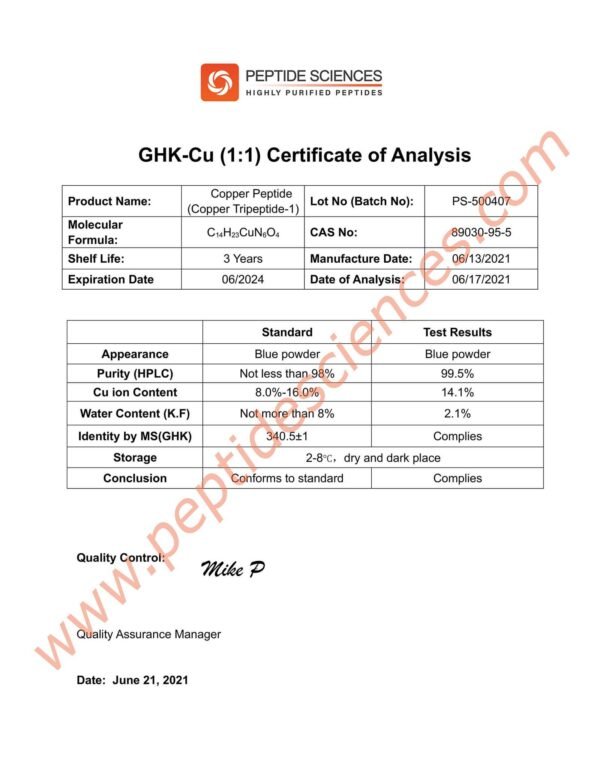
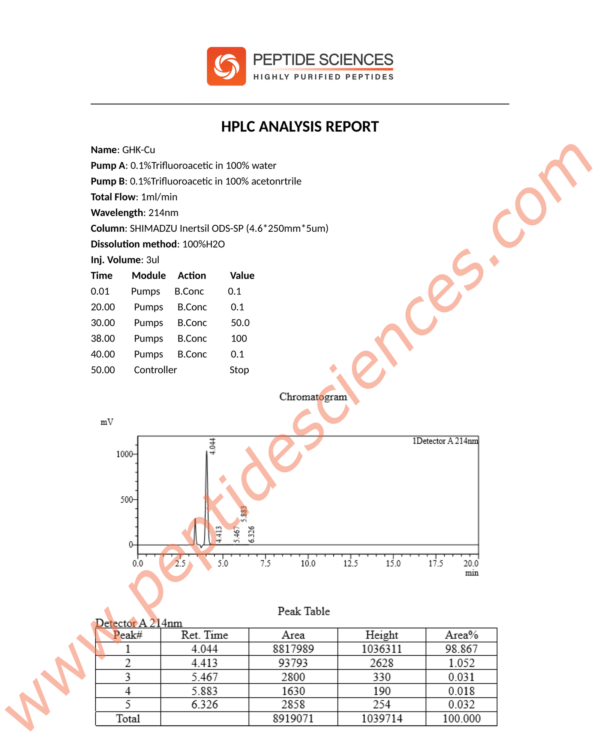
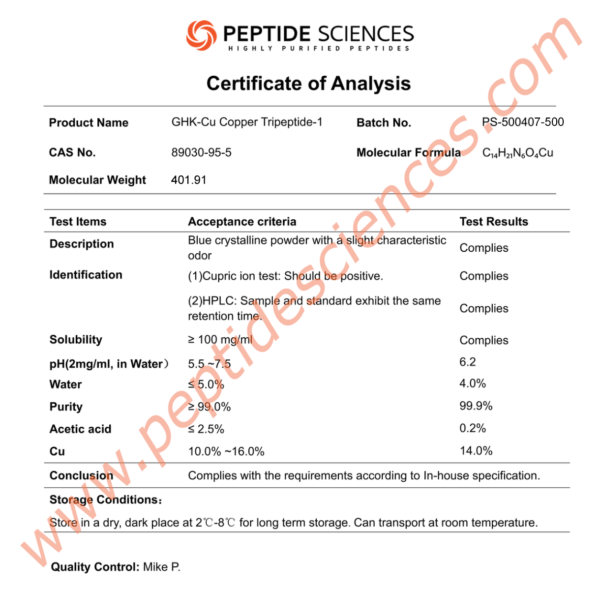
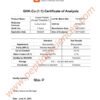
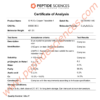
| Purity | Product-specific information should be verified from the applicable Certificate of Analysis or product documentation. |
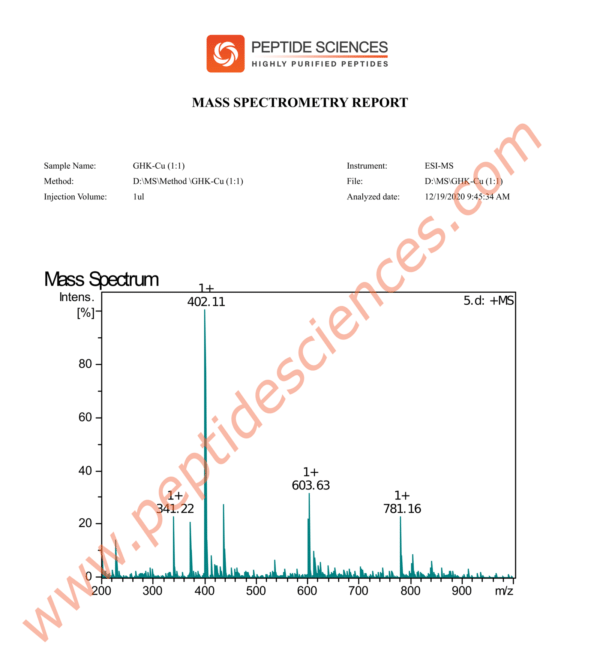
| Molecular Data | Product-specific information should be verified from applicable documentation. |
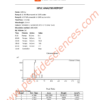
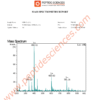
| Analytical Testing | Verify current batch-specific documentation before research use. |
Storage and Handling
Storage requirements can vary according to the supplied formulation, packaging, and manufacturer documentation. Researchers should follow the current product label and applicable batch documentation rather than relying on generalized storage recommendations.
For laboratory handling, researchers should use appropriate procedures for peptide materials, including suitable personal protective equipment, controlled laboratory environments, and contamination-prevention practices.
Product-specific stability, reconstitution, compatibility, and storage information should be confirmed through the applicable Certificate of Analysis or product documentation.
Why Researchers Choose Peptide Sciences
Researchers evaluating Peptide Sciences legit should focus on verifiable product information rather than relying solely on marketing claims. Important considerations include product identity, batch documentation, analytical characterization, and the availability of supporting quality records.
For a product such as GHK-Cu, appropriate documentation can help researchers confirm that the material supplied corresponds to the intended copper-peptide complex and is suitable for the laboratory’s research requirements.
When comparing suppliers, researchers may also encounter searches for a peptide science coupon or other promotional terms. Pricing and promotional availability should always be verified directly through the applicable supplier’s current information and should not replace evaluation of product documentation and research suitability.
Peptide Sciences positions its research products for professional laboratory applications, allowing researchers to evaluate materials according to their own analytical and experimental requirements.
Research Considerations
GHK-Cu is an established subject of biochemical and cellular research, but evidence can differ significantly between in-vitro, ex-vivo, and in-vivo models.
Experimental findings involving fibroblasts, extracellular matrix pathways, oxidative stress, or inflammatory signaling should therefore be interpreted according to the model in which they were generated. Results from one experimental system should not automatically be generalized to other systems or to humans.
Researchers should also account for variables such as peptide purity, copper coordination, formulation, stability, experimental concentration, exposure conditions, cell type, and analytical methodology.
Laboratory Research Use Only
GHK-Cu 500mg is provided strictly for Laboratory Research Use Only. It is not intended for human consumption, self-administration, diagnosis, treatment, prevention, or mitigation of any disease or medical condition. It is also not intended to serve as a finished consumer product.
Researchers are responsible for following applicable laboratory safety procedures, institutional requirements, and relevant laws and regulations when handling and studying this material.