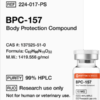

Peptide Sciences BPC-157 – Research Peptide for Cellular and Molecular Studies
Peptide Sciences BPC-157 is a synthetic peptide research compound studied in experimental models of cellular signaling, tissue biology, gastrointestinal physiology, and vascular-related pathways. BPC-157 has received considerable attention in preclinical literature, although its biological mechanisms remain an active area of investigation.
The peptide is commonly described in scientific literature as a 15-amino-acid peptide derived from a sequence associated with a protective protein found in gastric juice. Its research profile is distinct from many conventional peptide hormones because BPC-157 does not have a clearly established single classical receptor that fully explains its reported biological effects.
Instead, research has explored interactions involving several molecular pathways and signaling systems. These include pathways associated with nitric oxide signaling, vascular endothelial growth factor (VEGF), growth-factor signaling, and cellular responses involved in tissue biology.
Researchers interested in BPC-157 from Peptide Sciences should distinguish between experimentally observed biological activity and established clinical evidence. Much of the published research remains preclinical.
Primary Research Classification
| Attribute | Research Information |
|---|---|
| Product | Peptide Sciences BPC-157 |
| Primary keyword | Peptide Sciences BPC-157 |
| Compound class | Synthetic peptide |
| Peptide length | 15 amino acids |
| Research areas | Peptide biology, cellular signaling, gastrointestinal research, vascular biology |
| Evidence base | Primarily preclinical research |
| Intended application | Laboratory research |
| Human administration | Not intended |
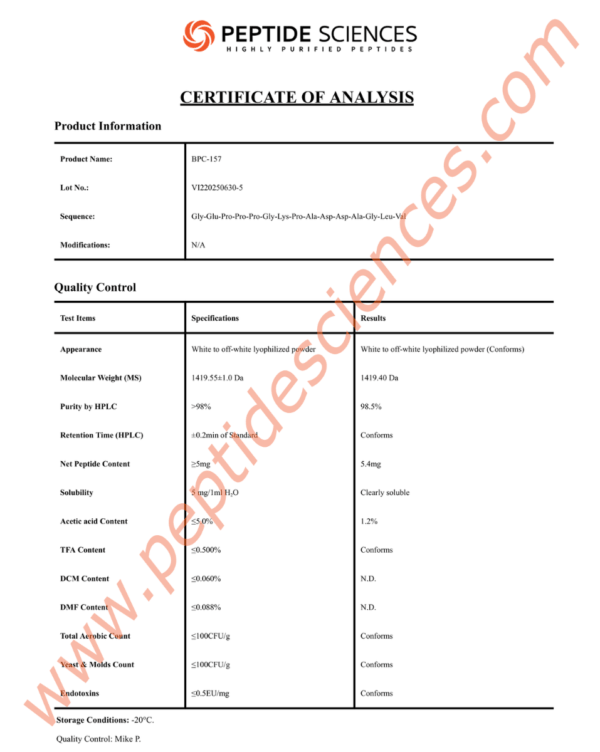
Product-specific information should be verified from the applicable Certificate of Analysis or product documentation.
Scientific Background
BPC-157 has been investigated extensively in experimental research, particularly in animal models. Scientific interest developed from observations involving biological responses in gastrointestinal and other tissue systems.
Unlike well-characterized endocrine peptides with a defined receptor and established physiological signaling pathway, the molecular biology of BPC-157 remains less clearly established.
Published research has proposed relationships between BPC-157 and multiple signaling systems. Investigations have included nitric oxide (NO) pathways, VEGF-related signaling, fibroblast and endothelial cell responses, and other mechanisms involved in cellular communication.
This makes BPC-157 an interesting research tool for laboratories studying how short peptides can influence complex biological signaling networks.
At the same time, researchers should recognize the limitations of the evidence. Findings from animal models cannot automatically be extrapolated to humans, and proposed mechanisms should not be treated as definitively established unless independently validated.
Mechanism of Research Interest
One of the most important research questions surrounding BPC-157 is how the peptide produces the biological effects reported in experimental systems.
The precise mechanism remains unresolved. Rather than assigning BPC-157 to one confirmed receptor pathway, researchers have investigated several possible molecular interactions.
Nitric Oxide Signaling
Nitric oxide is an important signaling molecule involved in vascular function and cellular communication. Experimental research has investigated relationships between BPC-157 and nitric oxide-related pathways.
These studies provide a basis for examining how BPC-157 may influence cellular signaling under controlled experimental conditions.
VEGF and Angiogenic Signaling
VEGF is a major signaling protein involved in endothelial-cell activity and angiogenesis. Experimental work has examined associations between BPC-157 and VEGF-related pathways.
This area of research may be relevant to laboratories studying:
- Endothelial-cell signaling
- Angiogenic pathways
- Vascular biology
- Growth-factor interactions
- Cellular responses to tissue stress
These findings remain primarily preclinical and should not be presented as proof of a therapeutic effect.
Cellular Signaling Networks
BPC-157 research has also explored broader cellular signaling mechanisms. The peptide’s reported activity may involve multiple pathways rather than a single receptor-mediated mechanism.
This makes it potentially useful as a research subject for examining relationships between:
Peptide structure → molecular interaction → intracellular signaling → cellular response
Such investigations can help researchers better understand the biological activity of experimental peptides.
Key Research Applications
1. Peptide Signaling Research
BPC-157 can be studied as a model for investigating how short peptide molecules interact with biological systems.
Researchers may examine changes in cellular signaling markers, protein expression, or pathway activity under controlled experimental conditions.
2. Gastrointestinal Research
BPC-157 has historically attracted significant research interest in gastrointestinal experimental models. Laboratory studies have examined its relationship with gastrointestinal tissue responses and associated molecular pathways.
These studies remain largely preclinical.
3. Vascular Biology
Research involving endothelial signaling and vascular-related pathways represents another important area of interest.
Laboratories may investigate relationships involving VEGF, nitric oxide, endothelial responses, and related signaling mechanisms.
4. Cellular and Molecular Biology
Because the precise mechanism of BPC-157 remains under investigation, it can serve as a subject for studies examining:
- Protein expression
- Cell signaling
- Growth-factor pathways
- Molecular interactions
- Cellular stress responses
- Signal-transduction mechanisms
5. Preclinical Research
A substantial portion of BPC-157 research has been conducted using animal models. Such studies can provide hypotheses for further investigation but cannot establish human efficacy or safety.
Researchers should therefore clearly separate preclinical observations from clinical evidence.
Molecular Characteristics
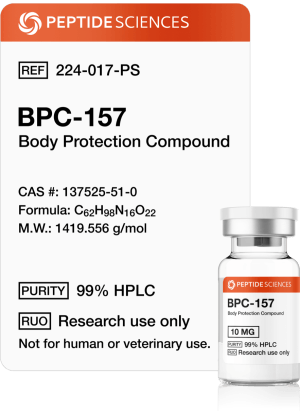
BPC-157 is generally described as a short peptide consisting of 15 amino acids. Its sequence and structural characteristics are important when investigating peptide identity and biological activity.
However, product-specific analytical specifications should not be assumed from general literature.
Product Documentation
Researchers should verify:
- Peptide identity
- Lot or batch information
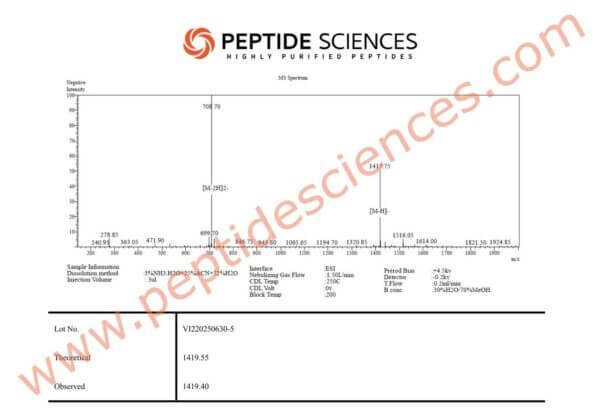
- Analytical characterization
- Purity specification, if applicable
- Certificate of Analysis
- Formulation information
- Packaging information
- Applicable storage requirements
Product-specific information should be verified from the applicable Certificate of Analysis or product documentation.
No specific purity percentage, analytical result, molecular formula, formulation characteristic, or storage condition should be attributed to a particular product without supporting documentation.
Research Applications and Experimental Design
Researchers working with BPC-157 should select experimental conditions according to the specific research model rather than relying on generalized online protocols.
Important considerations may include:
- Experimental model
- Cell type or biological system
- Appropriate controls
- Peptide identity
- Batch documentation
- Analytical verification
- Assay selection
- Relevant signaling markers
- Experimental endpoints
- Reproducibility requirements
Because BPC-157’s mechanisms are not fully established, appropriate controls are particularly important when interpreting experimental findings.
Why Researchers Choose Peptide Sciences
Researchers evaluating Peptide Sciences BPC-157 should focus on verifiable quality and documentation rather than unsupported claims.
Relevant evaluation criteria can include:
- Clearly identified product
- Batch-specific documentation
- Certificate of Analysis when applicable
- Analytical characterization
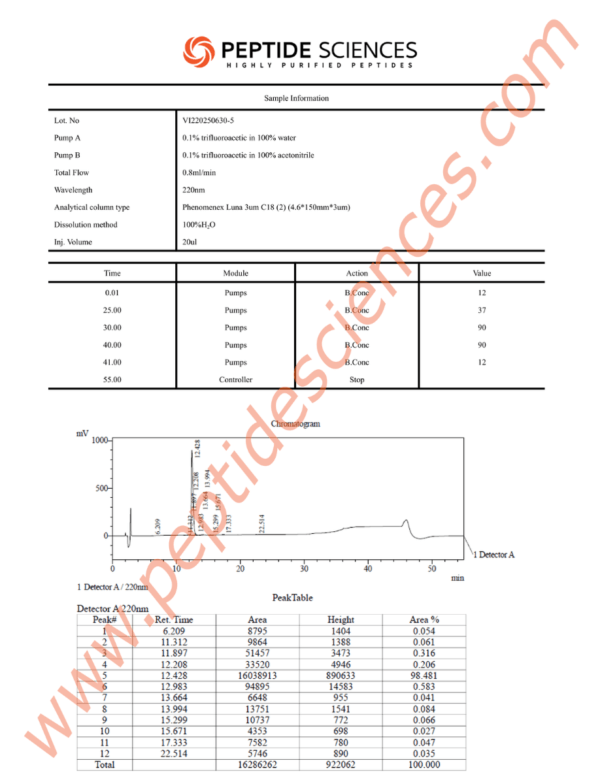
- HPLC testing where documented
- Mass-spectrometry analysis where documented
- Lot traceability
- Appropriate product labeling
- Research-use documentation
For laboratories researching peptide science, reliable documentation is important because peptide identity and analytical quality can directly affect experimental reproducibility.
Researchers searching for Peptide Sciences legit information should evaluate the company and its products using verifiable documentation and independent quality requirements rather than relying solely on advertisements or third-party claims.
Similarly, users searching for a peptide sciences promo code should treat promotional information separately from scientific product quality. A discount or promotional offer does not establish peptide identity, purity, analytical performance, or suitability for a particular research application.
Storage and Handling
Peptide stability can depend on factors such as formulation, packaging, environmental exposure, and product-specific characteristics.
For that reason, researchers should not assume generic storage requirements for this product.
Product-specific information should be verified from the applicable Certificate of Analysis or product documentation.
Laboratories should follow the manufacturer’s documented storage and handling requirements and their own established laboratory procedures.
Research Limitations
BPC-157 remains an area of scientific investigation, and several important limitations should be considered.
First, much of the available literature is based on preclinical models. Second, the precise molecular mechanism has not been conclusively established. Third, findings observed in animal or cellular experiments cannot automatically be translated into human outcomes.
Accordingly, BPC-157 should be discussed as an experimental research compound rather than as an established therapeutic intervention.
This distinction is particularly important when creating educational, commercial, or scientific content around the compound.
Laboratory Research Use Only
Peptide Sciences BPC-157 is intended strictly for laboratory research use only.
This product description does not provide human or animal dosing instructions, administration protocols, reconstitution instructions, or treatment recommendations.
BPC-157 should not be marketed or represented as a proven treatment for injuries, gastrointestinal disorders, inflammation, cardiovascular conditions, or other medical conditions. Experimental findings do not establish clinical efficacy or safety.
Researchers should conduct all work involving BPC-157 in accordance with applicable institutional requirements, laboratory safety procedures, and relevant regulations.