

MK-677 (Ibutamoren) Research Peptide
MK-677 (Ibutamoren) is a synthetic, non-peptide growth hormone secretagogue that has been investigated extensively in research involving the endocrine system. Although it is commonly grouped with peptides and peptide-related research compounds, Ibutamoren itself is structurally distinct from peptide hormones.
Its primary research interest comes from its activity at the growth hormone secretagogue receptor type 1a (GHS-R1a), also known as the ghrelin receptor. Activation of this receptor can influence signaling pathways associated with growth hormone release and downstream endocrine activity.
Researchers interested in the growth hormone/IGF-1 axis can therefore use MK-677 as a model compound for studying how ghrelin-receptor signaling interacts with endocrine and metabolic systems.
Primary Research Classification
Research Category: Growth Hormone Secretagogue / Ghrelin Receptor Agonist
Compound Type: Non-peptide small molecule
Research Focus: GHS-R1a signaling, growth hormone regulation, IGF-1 pathways, endocrine physiology, metabolic research
Scientific Background
Growth hormone secretion is regulated by a complex interaction between the hypothalamus, pituitary gland, peripheral signaling molecules, and feedback mechanisms. Ghrelin is one of the signaling molecules involved in this system and acts through the GHS-R1a receptor.
MK-677 was developed as an orally active growth hormone secretagogue designed to interact with this receptor system. Its research significance lies in its ability to provide scientists with a pharmacological model for investigating ghrelin-related signaling without being a peptide itself.
Studies of Ibutamoren have examined changes in growth hormone secretion and insulin-like growth factor 1 (IGF-1), along with broader physiological outcomes. However, research findings should be interpreted according to the specific experimental model, study population, and endpoint being evaluated.
The compound should not be described as equivalent to naturally occurring growth hormone. Instead, its scientific value comes from its ability to interact with pathways that regulate endogenous growth hormone secretion.
Mechanism of Research Interest
The primary molecular target associated with MK-677 is GHS-R1a.
GHS-R1a is a G-protein-coupled receptor involved in signaling associated with ghrelin and growth hormone regulation. When activated, downstream signaling can influence pituitary growth hormone secretion and related endocrine processes.
Researchers investigating MK-677 commonly focus on several interconnected areas:
Ghrelin Receptor Signaling
Ibutamoren acts as an agonist at GHS-R1a, providing a model for studying receptor-mediated signaling. This makes the compound useful for research into how ghrelin-receptor activation influences endocrine responses.
Growth Hormone Regulation
Growth hormone secretion is naturally pulsatile and influenced by multiple regulatory signals. MK-677 has been investigated as a pharmacological tool for examining how activation of the ghrelin receptor can affect this regulatory system.
IGF-1 Signaling
Growth hormone stimulates downstream production of insulin-like growth factor 1 (IGF-1). Researchers can therefore investigate the relationship between GHS-R1a activation, growth hormone signaling, and IGF-1-related pathways.
Metabolic Research
Ghrelin signaling is also associated with appetite and energy regulation. Consequently, MK-677 has been investigated in research models examining metabolic signaling, nutritional physiology, and changes associated with endocrine regulation.
Key Research Applications
MK-677 may be of interest in several areas of laboratory research:
- Growth hormone research: Investigating mechanisms involved in endogenous growth hormone secretion.
- Ghrelin receptor studies: Examining GHS-R1a activation and downstream cellular signaling.
- IGF-1 research: Studying relationships between growth hormone secretion and IGF-1 activity.
- Endocrine research: Modeling interactions between hypothalamic, pituitary, and peripheral hormonal pathways.
- Metabolic research: Investigating pathways involving appetite, energy balance, and endocrine signaling.
- Aging research: Studying age-associated changes in growth hormone and IGF-1 signaling.
- Skeletal research: Exploring the relationship between endocrine signaling and bone-related physiological processes.
- Body-composition research: Investigating how growth hormone-related pathways interact with muscle and adipose tissue biology.
These applications describe areas of scientific investigation rather than established therapeutic uses.
MK-677 and Peptide Research
Despite frequently appearing alongside research peptides, MK-677 is not itself a peptide. Ibutamoren is a small-molecule compound that produces its research effects through interaction with the ghrelin receptor.
This distinction is important when organizing a research catalog. It can be classified under growth hormone secretagogues, ghrelin receptor agonists, or endocrine research compounds, depending on the structure of the website’s taxonomy.
Researchers comparing MK-677 with peptide-based secretagogues can investigate differences in molecular structure, receptor activity, pharmacological behavior, and downstream endocrine signaling.
Technical Specifications
| Specification | Information |
|---|---|
| Product Name | MK-677 (Ibutamoren) |
| Common Name | Ibutamoren |
| Compound Type | Non-peptide small molecule |
| Primary Research Target | GHS-R1a / Ghrelin Receptor |
| Research Classification | Growth Hormone Secretagogue |
| Research Focus | Endocrine and metabolic signaling |
| Formulation | Verify current product documentation |
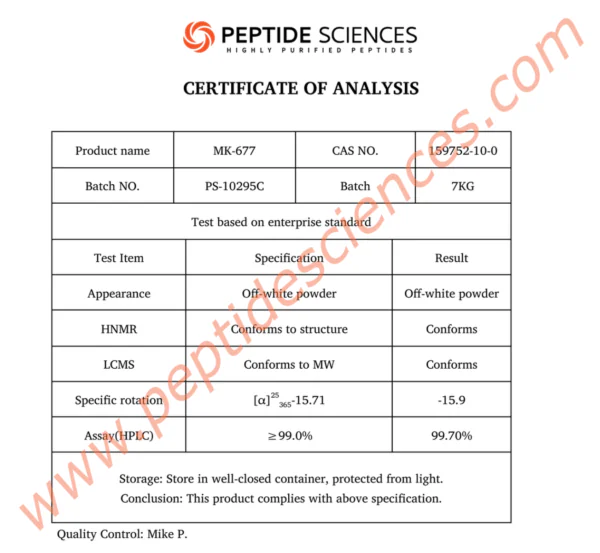
| Purity | Verify applicable batch documentation |
| Molecular Weight | Verify applicable product documentation |
| Storage | Follow current product-specific documentation |
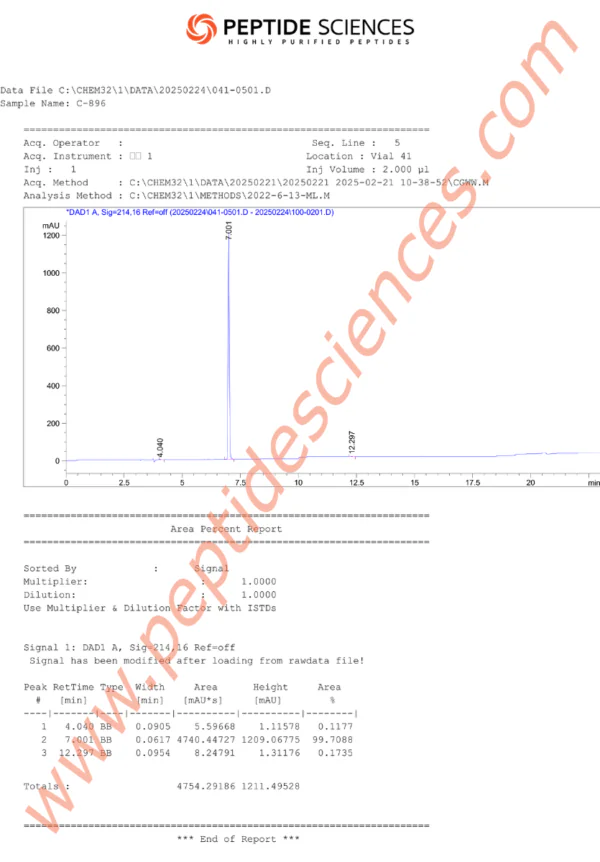
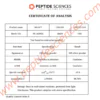
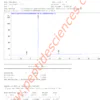
| Analytical Testing | Verify applicable Certificate of Analysis |
Important: Product-specific information should be verified from the applicable Certificate of Analysis or product documentation. Specifications such as purity, analytical testing, formulation, and storage requirements should not be assumed without batch-specific documentation.
Why Researchers Choose Peptide Sciences
Researchers evaluating MK-677 (Ibutamoren) from Peptide Sciences should focus on product-specific documentation and analytical information when assessing suitability for laboratory work.
Relevant quality considerations may include:
- Compound identity: Confirmation that the material corresponds to the stated research compound.
- Analytical characterization: Applicable analytical testing should be reviewed where provided.
- Batch documentation: Researchers can consult product-specific documentation for information applicable to their particular batch.
- Research-use positioning: The product is presented for laboratory research rather than consumer or therapeutic use.
- Documentation transparency: Researchers should review available specifications before incorporating a material into an experimental protocol.
The quality characteristics of any particular batch should always be determined from its applicable documentation rather than generalized across products.
Storage and Handling
Proper storage and handling are important for maintaining the integrity of research compounds.
For MK-677 (Ibutamoren), researchers should follow the storage conditions supplied with the specific product and its accompanying documentation. Factors such as temperature, moisture, light exposure, container integrity, and handling conditions may affect long-term material stability.
Product-specific information should be verified from the applicable Certificate of Analysis or product documentation.
Laboratory personnel should also follow their institution’s established procedures for labeling, handling, storage, and disposal of research chemicals.
Research-Use Disclaimer
MK-677 (Ibutamoren) is supplied for laboratory research use only. It is not intended for human or animal consumption, diagnosis, treatment, prevention, or use as a finished pharmaceutical or dietary product. This product description is provided for scientific and educational purposes and should not be interpreted as medical advice. Researchers are responsible for following applicable laboratory safety procedures, regulations, and institutional requirements.