
Ipamorelin Research Peptide: Exploring GHS-R1a and Growth Hormone Signaling
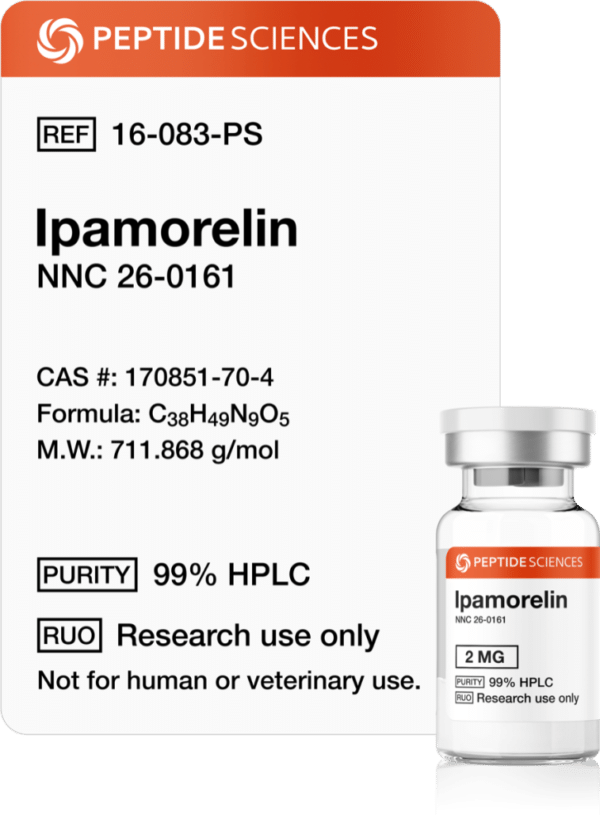
Ipamorelin is a synthetic pentapeptide belonging to the class of growth hormone secretagogues. Its scientific importance comes primarily from its interaction with the growth hormone secretagogue receptor type 1a (GHS-R1a), a receptor involved in the regulation of growth hormone secretion.
The compound provides researchers with a useful model for studying the relationship between peptide structure and receptor-mediated signaling. Research involving Ipamorelin can extend from receptor pharmacology and peptide chemistry to broader investigations of pituitary and endocrine pathways.
Growth hormone regulation involves several interconnected signaling systems. By examining how Ipamorelin interacts with GHS-R1a, researchers can investigate specific elements of this regulatory network without treating the compound itself as equivalent to naturally occurring growth hormone.
Primary Research Classification
| Classification | Research Information |
|---|---|
| Product | Ipamorelin |
| Compound Type | Synthetic peptide |
| Research Class | Growth Hormone Secretagogue |
| Primary Target | GHS-R1a |
| Research Area | Endocrine and receptor signaling |
| Key Research Interest | Growth hormone secretagogue activity |
Scientific Background
Growth hormone is regulated through a complex endocrine system involving the hypothalamus, pituitary gland, and peripheral tissues. Several endogenous signaling molecules contribute to this process, including growth hormone-releasing hormone and ghrelin.
The discovery of growth hormone secretagogues gave researchers additional tools for examining the molecular mechanisms responsible for growth hormone release. Ipamorelin belongs to this broader research class and has been investigated because of its activity at GHS-R1a.
GHS-R1a is a G-protein-coupled receptor (GPCR) associated with ghrelin signaling and growth hormone regulation. Receptor activation can trigger intracellular signaling events that influence pituitary somatotroph activity.
This makes Ipamorelin particularly relevant to research investigating the connection between peptide-receptor interactions and endocrine signaling.
Mechanism of Research Interest
The primary mechanism of research interest surrounding Ipamorelin involves its interaction with GHS-R1a.
GHS-R1a Receptor Signaling
Ipamorelin has been characterized as an agonist of the growth hormone secretagogue receptor. Researchers can investigate how activation of this receptor influences intracellular signaling and subsequent endocrine responses.
This type of research can help clarify how synthetic peptides interact with GPCRs and how structural features influence receptor activity.
Pituitary Signaling
Growth hormone is produced by somatotroph cells within the anterior pituitary. Research models can use growth hormone secretagogues to investigate the signaling mechanisms that influence these cells.
Ipamorelin research may therefore examine:
- GHS-R1a activation
- Receptor-mediated signaling
- Pituitary cell responses
- Growth hormone secretion pathways
- Peptide structure-activity relationships
Growth Hormone and IGF-1 Pathways
Growth hormone is connected to downstream signaling involving insulin-like growth factor 1 (IGF-1). Consequently, research involving Ipamorelin can examine relationships between receptor activation, growth hormone signaling, and downstream endocrine pathways.
The exact response can vary according to the experimental system, study design, and biological model, so research findings should be interpreted within their specific scientific context.
Peptide Structure and Receptor Research
Ipamorelin is particularly interesting from a peptide pharmacology perspective because its biological activity depends on interactions between its molecular structure and a specific receptor system.
Researchers studying peptide structure-activity relationships may compare Ipamorelin with other growth hormone secretagogues to investigate how differences in sequence and molecular characteristics influence receptor recognition and signaling.
This type of comparative work can provide insight into:
- Peptide-receptor binding
- Receptor selectivity
- Intracellular signaling
- Structure-activity relationships
- Endocrine pathway regulation
- Differences between secretagogue classes
Such research can be useful for understanding the fundamental principles of peptide pharmacology.
Key Research Applications
Ipamorelin may be investigated across several laboratory research areas:
Growth Hormone Research
Studying cellular and molecular mechanisms associated with growth hormone secretagogue activity.
GHS-R1a Research
Examining receptor activation, receptor signaling, and peptide-receptor interactions.
Endocrine Research
Investigating communication between pituitary signaling and downstream endocrine pathways.
Peptide Pharmacology
Evaluating how peptide structure influences receptor activity and biological signaling.
Pituitary Research
Studying signaling mechanisms associated with somatotroph cells and growth hormone regulation.
IGF-1 Research
Investigating the relationship between growth hormone signaling and downstream IGF-1 pathways.
Comparative Secretagogue Research
Comparing Ipamorelin with other research compounds such as GHRP-2, GHRP-6, CJC-1295, and related secretagogues.
These applications describe areas of scientific investigation and should not be interpreted as established therapeutic applications.
Ipamorelin and Other Research Secretagogues
Researchers frequently examine Ipamorelin alongside other growth hormone-related compounds. Comparative studies can help determine how different molecular structures interact with endocrine signaling systems.
For example, researchers may compare compounds according to:
- Receptor affinity and activity
- Peptide structure
- Signaling selectivity
- Experimental response
- Pharmacological characteristics
- Downstream endocrine effects
This makes Ipamorelin a useful reference compound for laboratories investigating the broader field of growth hormone secretagogue research.
Technical Specifications
| Specification | Information |
|---|---|
| Product Name | Ipamorelin |
| Compound Type | Synthetic peptide |
| Classification | Growth Hormone Secretagogue |
| Primary Research Target | GHS-R1a |
| Research Focus | Endocrine and receptor signaling |
| Peptide Sequence | Product-specific information should be verified |
| Molecular Weight | Product-specific information should be verified |
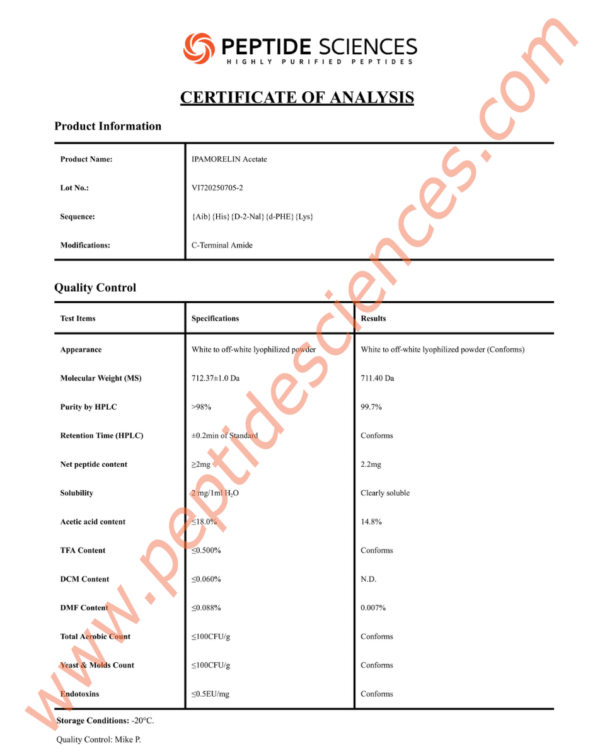
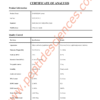
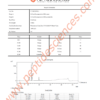
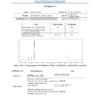
| Purity | Verify applicable batch documentation |
| Formulation | Verify current product documentation |
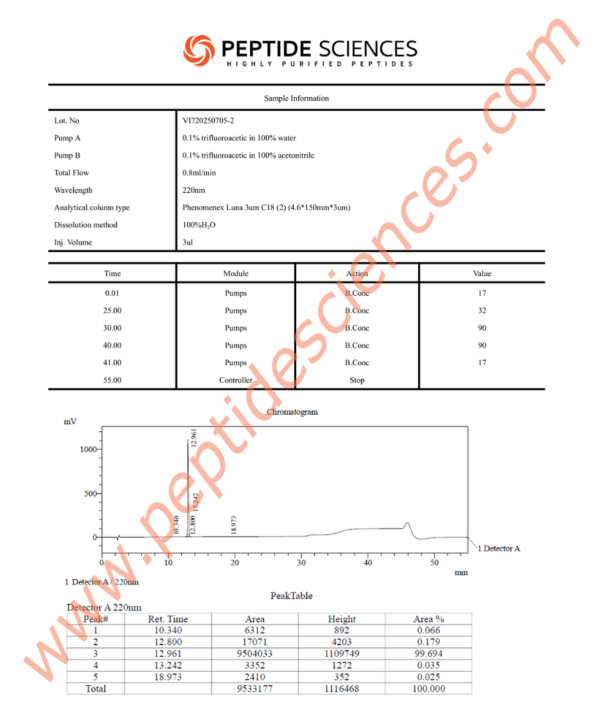
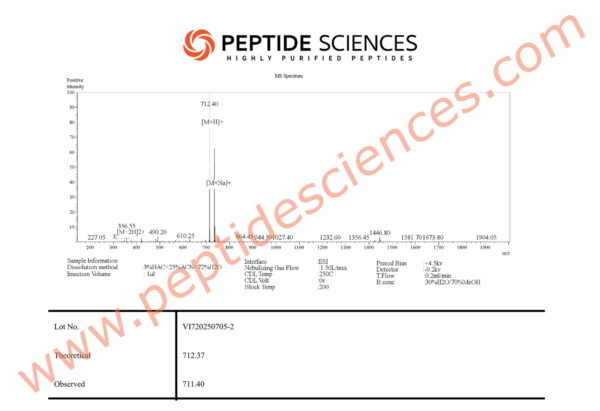
| Analytical Testing | Verify applicable Certificate of Analysis |
| Storage | Follow current product-specific documentation |
Product-specific information should be verified from the applicable Certificate of Analysis or product documentation. Do not assume purity, molecular weight, formulation, analytical testing, or storage requirements without reviewing the documentation associated with the applicable batch.
Storage and Handling
Research compounds should be stored and handled according to the manufacturer’s current product documentation and established laboratory procedures.
Researchers working with Ipamorelin should verify applicable storage conditions before incorporating the material into an experimental workflow. Environmental factors such as temperature, moisture, light exposure, container integrity, and repeated handling may be relevant to research-material stability.
Laboratory personnel should also maintain appropriate labeling, controlled storage, handling procedures, and disposal practices according to institutional requirements.
Product-specific storage information should be verified from the applicable product documentation or Certificate of Analysis.
Why Researchers Choose Peptide Sciences
Researchers evaluating Ipamorelin from Peptide Sciences should prioritize verifiable product information when determining whether a material is appropriate for a particular laboratory project.
Important considerations may include:
- Compound identity: Confirmation of the stated peptide identity.
- Analytical characterization: Review of available analytical information.
- Batch documentation: Evaluation of documentation associated with the specific batch.
- Purity information: Verification of the stated purity rather than relying on generalized claims.
- Research-use positioning: Clear identification of the material as a laboratory research product.
For researchers searching for Peptide Science resources, product-specific documentation provides the most appropriate basis for evaluating a research compound. Likewise, searches for a peptide science coupon code should be treated separately from scientific product evaluation; promotional availability does not establish product identity, purity, or suitability for a particular experiment.
Research-Use Disclaimer
Ipamorelin is supplied for Laboratory Research Use Only. It is not intended for human or animal consumption, administration, diagnosis, treatment, prevention, or use as a finished pharmaceutical product. This information is provided for scientific and educational purposes only and should not be interpreted as medical advice. Researchers are responsible for following applicable laboratory safety procedures, institutional requirements, and relevant laws and regulations.